By vet Diane Watson
Calf pneumonia remains a significant challenge in the dairy industry. While the immediate effects of disease are well recognised, the hidden long-term consequences can reduce growth rates, compromise future productivity and ultimately affect farm profitability.
Lung scanning offers farmers a way to detect pneumonia before clinical signs develop, allowing earlier intervention and more effective treatment. This can help rear healthier, more productive replacement heifers while supporting responsible antibiotic use.
The true cost of pneumonia often extends beyond the initial illness. Affected calves can suffer from poorer feed efficiency, reduced growth rates and delayed development. In replacement heifers, respiratory disease early in life has been linked to reduced fertility, lower milk yields and an increased risk of premature culling.
Alarmingly, research suggests that only 35% of calves with pneumonia show obvious clinical signs. Meaning that a large proportion of diseased calves are left unidentified and without treatment, even in the most well-managed units.
This is where calf lung scanning, and its ability to detect subclinical pneumonia is proving to be a valuable addition to the calf health toolbox.
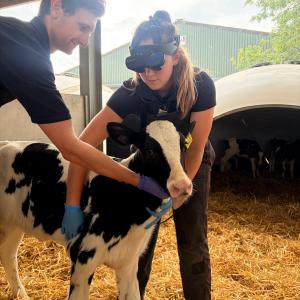
The technique involves using a standard ultrasound scanner, the same as that used for pregnancy detection in cows, to assess a calf’s chest. The scan itself is quick and simple, taking only one to two minutes per calf, with no need for sedation or clipping.
Vets can examine the lungs and identify areas of consolidation, where healthy air-filled lung tissue has been replaced by infection and inflammation, indicating respiratory disease.
These changes can be observed up to a week earlier than traditional methods, which rely upon the development of symptoms. Calves are assigned a score based on the extent and severity of lung consolidation, and the results are available immediately, allowing the farmer to make well-informed treatment decisions.
By scanning regularly on farm, usually prior to the time clinical signs would typically start to develop in the calves, pneumonia can be detected earlier than ever before.
Early identification allows prompt treatment, before irreversible damage has occurred, and allows a more targeted approach to treatment. Early treatment is associated with very high cure rates, reducing overall antibiotic usage supporting better antibiotic stewardship on farm, as well as improved growth rates and overall stronger, healthier calves.
The economic impact of pneumonia can be substantial, particularly when lung damage becomes permanent. Studies estimate losses of between £500 and £1,500 per affected heifer, driven by delayed age at first calving and reduced milk production. By identifying and treating disease before significant lung damage occurs, lung scanning can help prevent these losses, transforming what may initially seem like an additional cost into a worthwhile investment in the future productivity of the herd.
As well as identifying calves that require treatment, lung scanning can provide valuable information at a herd level. By monitoring the prevalence of lung lesions and the age at which the calves are affected, farmers can identify any underlying management or environmental risk factors for pneumonia outbreaks. This information can then be used to implement targeted preventative measures such as housing, nutrition, colostrum management or vaccination programmes.
Lung scanning at weaning can identify heifers with existing lung damage that will lead to poor performance as an adult cow. Combined with information such as growth rates, health records and genetic merit, this can support more informed replacement and breeding decisions.
Lung scanning is becoming an increasingly valuable tool, supporting earlier and more accurate treatments, improved growth rates, higher future milk yields and reduced antibiotic use. When combined with good colostrum management, nutrition and housing, lung scanning can significantly reduce the impact of respiratory disease on youngstock and improve lifetime productivity.