By vet Dan Lawson
Lambing is one of the most stressful yet exciting times of the year for sheep farmers and vets.
After birth, the first 24 hours are the most crucial period in a lamb’s life. Newborn lambs must quickly adapt to life outside the womb, often in cold and unpredictable weather conditions.
One of the most important indicators of survival is the lamb’s ability to stand, move around, and locate the ewe’s udder in order to suckle. The speed at which this happens is directly linked to the lamb’s chances of survival.
Our role as vets is to ensure that every lamb born is given the best possible opportunity to survive and thrive, even in what can sometimes be a harsh environment.
Preparation for lambing begins long before the lambs are born. One of the most important aspects of preparation is ensuring that the ewes are in the correct body condition before lambing begins. Body condition scoring (BCS) is used to assess the amount of fat and muscle on a ewe and is measured on a scale from 1 to 5. Ideally, ewes should have a body condition score of around 3 out of 5 before tupping (mating). By the time lambing occurs, the aim is for the ewe to have a body condition score of approximately 2.5 out of 5. Maintaining this balance is crucial, as ewes that are too thin may produce weaker lambs with low birth weights, while overly fat ewes may be at greater risk of lambing difficulties.
Birthweight is another key factor influencing lamb survival. Lambs with low birthweights are more vulnerable to hypothermia and starvation because they have less body fat and energy reserves to maintain their body temperature. On the other hand, excessively large lambs can increase the risk of dystocia, which is difficulty during labour. Dystocia can threaten the lives of both the ewe and the lamb if not managed promptly. Therefore, achieving the correct balance in ewe nutrition during pregnancy is essential for producing healthy lambs of an appropriate size.
One of the most critical elements of early lamb care is the intake of colostrum. Colostrum is the first milk produced by the ewe and is rich in energy, nutrients, and antibodies that help protect the lamb from disease. Lambs require approximately 50 mg/ml of body weight within the first six hours of life. This early intake is essential because a lamb’s ability to absorb antibodies decreases rapidly after birth. Ideally, the ewe will produce sufficient high-quality colostrum for her lambs. However, farmers should always have a backup supply available in the form of frozen colostrum from other ewes or high-quality artificial colostrum substitutes.
When selecting an alternative product, it is important to check the immunoglobulin (IgG) content, as good-quality colostrum typically contains more than 50 mg/ml of IgG.
Providing adequate shelter, dry bedding, and close monitoring can help reduce the risk of hypothermia. Ensuring that lambs receive enough colostrum and milk also helps maintain their energy levels and body temperature.
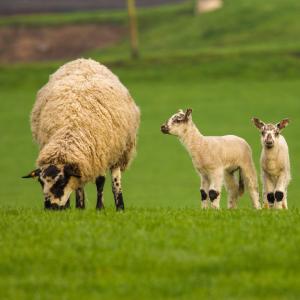
After the initial bonding period between the ewe and her lambs they are usually turned out to fresh grass if weather conditions are suitable. Access to fresh spring grass provides excellent nutrition for the ewe, supporting milk production and helping the lambs grow rapidly. Even after turnout, regular monitoring remains essential. Farmers continue to check lambs for signs of illness, weakness, or injury, as well as keeping an eye out for potential predators.
During this stage, important management tasks such as ear tagging and record-keeping are also carried out. Accurate records help farmers track lamb growth, health, and overall flock performance, allowing them to make better management decisions in the future.